
.jpg)
Walk a vessel during a maintenance round and the difference between environments becomes obvious.
Inside the engine room, insulation manages heat and vibration in a controlled space.
Step onto the open deck and the conditions change immediately. Salt hangs in the air. Sun exposure is constant. Moisture, wind, and vibration never really stop. Insulation is not only managing temperature. It is defending against the environment itself.
For engineers and maintenance teams responsible for keeping equipment protected, that difference in environment changes everything.
Because once equipment moves onto the frontlines, the battle never really stops.
.jpg)
On open decks, insulation faces a different set of stresses than it does below deck.
• Direct UV radiation breaks down outer materials and weakens stitching
• Continuous salt exposure accelerates corrosion in seams and fastening hardware
• Rain and moisture cycling increase intrusion and material deterioration
• Wind and vibration loosen attachment systems and reduce secure fit
• Wider temperature swings stress materials not designed for expansion and contraction
Over time, these forces degrade materials and create gaps that reduce thermal protection.
As insulation deteriorates, surface temperatures rise and both equipment and personnel become more exposed.
This pattern is common when insulation designed primarily for enclosed engine-room environments is installed in exposed areas of the vessel.
.png)
Stallion Marine thermal wraps are engineered specifically for real vessel conditions.
Instead of adapting insulation designed for controlled environments, Stallion blankets are built from the start to withstand open-deck exposure while still performing reliably in engine-room applications.
Every Stallion thermal wrap is engineered with:
• Marine grade, UV-resistant outer materials built for sustained sunlight
• Corrosion-resistant fastening systems designed for salt environments
• Moisture-resistant construction that limits water intrusion
• Vibration-stable attachment design that maintains fit underway
• Maintenance-ready reinstallation capability for repeated service cycles
This approach allows crews to remove, reinstall, and maintain insulation without degrading long-term performance.
That is the Stallion Marine standard.

Not every application requires the same level of protection.
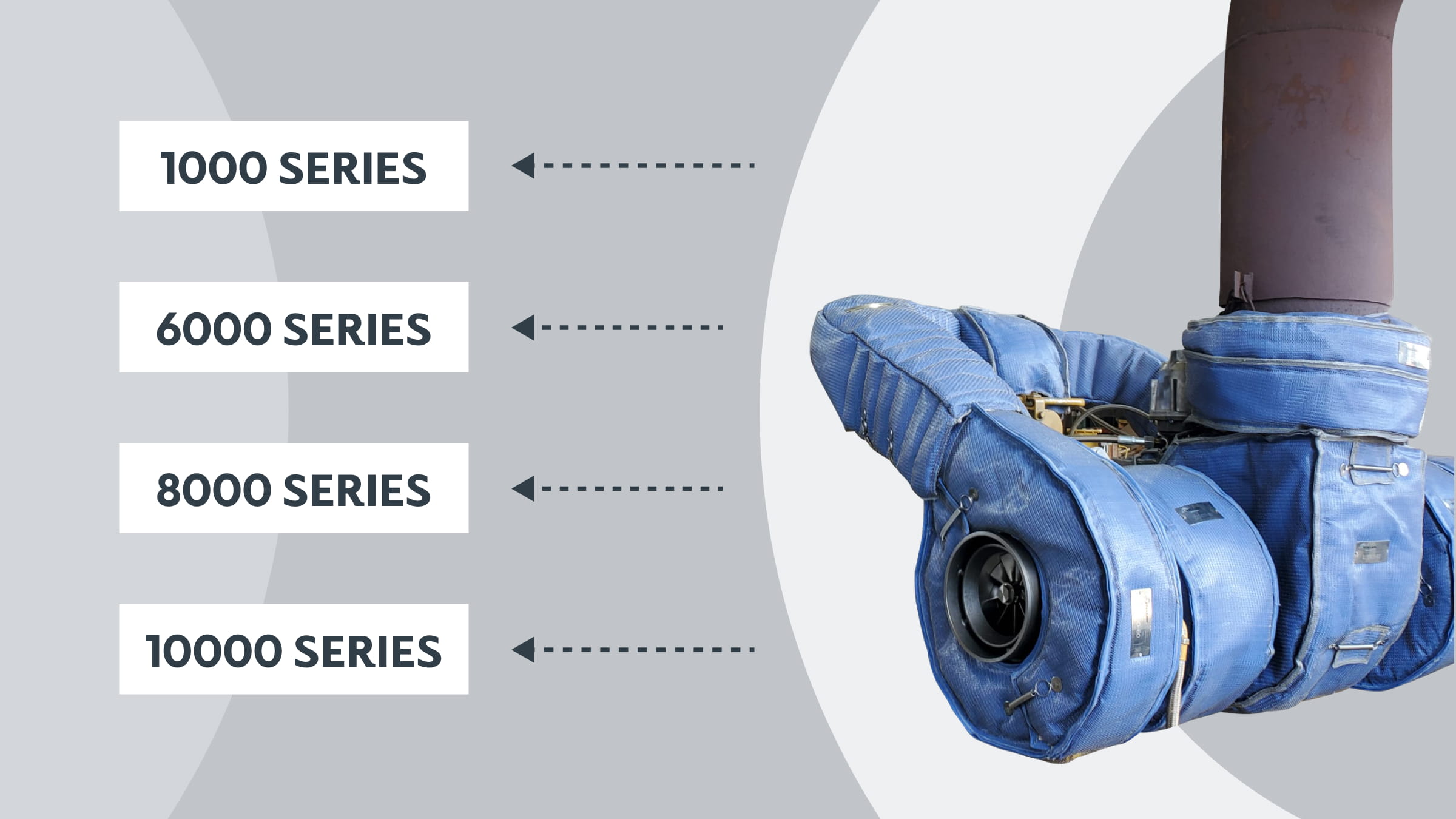
Stallion Marine provides a full lineup of ABS-approved thermal wraps designed for different temperature ranges and service conditions.
Available series include:
1000 Series
Light-duty protection for lower-temperature applications.
6000 Series
Versatile thermal protection for common vessel equipment.
8000 Series
Heavy-duty insulation designed for high-temperature systems.
10000 Series
Maximum protection for extreme temperature environments.
Each series maintains the same core Stallion principles: marine durability, serviceability, and inspection-ready construction.
Marine environments do not give insulation a break.
Salt, UV exposure, moisture, and vibration continue working every day equipment operates.
Stallion Marine thermal wraps are engineered to withstand those forces across the vessel while maintaining fit, seal, and heat safety.
Do not settle for insulation designed for easier environments.
Choose protection engineered for the conditions vessels actually face.
Get Stallion on Deck.
.jpg)
